How Engineering Education Moved From Workshops to Schools
Engineering education history traces how workshops, technical schools, mathematics, and drawing shaped instruction, helping teachers choose practical lessons with clear learning goals.
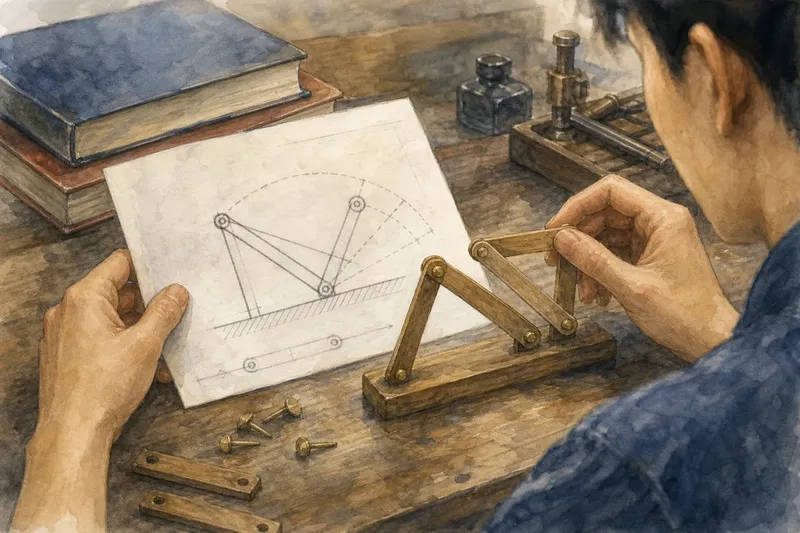
A student lays a paper drawing beside a small wooden joint, then turns the pieces to see why the sketch and the object do not quite agree. Engineering education history includes scenes like this, where learning through practice sits alongside formal study. The balance has never been identical across institutions or technical fields.
Workshops and apprenticeship
Before engineering became an established university subject, people learned many technical skills in workshops, shipyards, building projects, and military settings. In some European towns, craft guilds regulated particular trades and helped organize entry into them. Apprentices typically learned through observation, assistance, and increasingly demanding tasks under an experienced worker.
That training focused on a trade and its working practices, not a general engineering curriculum. A learner could become familiar with tools and materials without receiving systematic instruction in mathematical theory. Customs differed across trades and places, so apprenticeship should not be treated as one universal system.
Technical schools emerge
From the eighteenth century onward, some European governments and institutions created schools to prepare people for public works, military projects, and other technical responsibilities. France’s École des Ponts et Chaussées is associated with training for public works, while the École Polytechnique, founded during the French Revolution, became known for mathematical and scientific instruction.
These schools organized concepts that could be taught across different projects, including mathematics, mechanics, and technical drawing. They did not simply eliminate learning by doing. The mix of classroom instruction and practical work varied across institutions and changed over time.
Technical education also developed through other routes. Mechanics’ institutes in nineteenth-century Britain offered scientific and technical instruction, with access and subjects differing among institutions. In the United States, the Morrill Act of 1862 provided federal support for land-grant colleges, some of which developed engineering education alongside other fields. These examples point to varied institutional paths, not a single model of engineering school.
Drawing and laboratories
Technical drawing gave students a way to represent structures, machines, and components on paper. It also offered a shared means of communicating a design without requiring everyone to stand beside the object or worksite.
Laboratories created another setting for instruction. Students could observe materials or apparatus and compare what happened with an expectation or model. When the result differed, the mismatch could lead to questions about the setup, the observation method, or the assumptions behind the model.
Workshop activity remained relevant as formal instruction expanded. Handling materials and tools can reveal features that a drawing or equation does not make immediately apparent. A class might use several settings, with the choice shaped by its subject, available resources, and learning aims.
How did teaching change?
Did schools replace apprenticeships?
No single transition replaced workplace learning everywhere. Schools offered organized instruction in shared concepts and methods, while apprenticeships continued to teach trade-specific practices in many settings.
Why include mathematics?
Mathematics gives students ways to describe relationships and reason about technical problems beyond a single object. Its role depends on the subject and sits alongside other forms of instruction, such as drawing and practical work.
When did laboratories appear?
Laboratories became part of technical teaching at different times across institutions. Their equipment and purposes varied, so there is no single date that marks their arrival in every engineering school.
What can making teach?
Making can connect an idea to features students can observe in a material or system. Students should also be able to say what their model leaves out, since a classroom object does not represent every property of a working device.
Choosing a practical lesson
History offers no fixed formula for combining theory and practical work. Start with the question students should answer, then choose a task that makes relevant evidence visible.
- Check the learning goal: If it names a concept and an observable action, choose an activity that brings both into view; if it does not, clarify the question before selecting materials.
- Check the model: If the feature under study is visible in the model, use it for observation; if it is hidden or too complex, simplify the model or use a diagram.
- Check the tools: If the available tools support the task under the instructor’s safety rules, use them; if not, revise the setup or choose an approved alternative.
- Check the record: If students can capture observations in a sketch or table, ask them to compare notes with a prediction; if they cannot, add a demonstration pause or a clearer recording method.
- Check for a mismatch: If the result differs from the prediction, inspect the setup and assumptions; if it matches, ask what the model still leaves out.
- Check the assessment: If the goal is technical reasoning, assess the explanation and its evidence; if the goal is fabrication technique, assess the relevant process as well as the finished object.
Imagine a class studying a simple linkage with a sketch, two cardboard arms, and pushpins. Students predict the path of one arm, assemble the linkage, and notice that a loose pin lets it wobble. They secure the pin and compare the movement with the sketch. If the arm now follows the predicted path more clearly, the class can discuss how the joint affects the model; the cardboard still cannot represent every property of a metal mechanism.
Engineering education history at Bách Khoa
At Trường Đại học Bách khoa, ĐHQG-HCM, different technical subjects call for different ways to connect concepts with practice. A laboratory can support observation, a computing environment can make a model easier to inspect, and a workshop can put materials and tools directly in students’ hands. The useful choice depends on the kind of reasoning the lesson is meant to develop.
For a class at Bách Khoa, the practical lesson checklist can start with a specific concept, such as how a joint changes a linkage’s motion. The instructor can then choose a model, identify what students should observe, and decide how they will record it. That sequence keeps hands-on work connected to an explanation while making the model’s limits part of the lesson.